Eco-Friendly Cleaning Products That Actually Work (and the Ones That Do Not)
An honest, tested guide to green cleaning. Which products and ingredients clean as well as conventional ones, which fall short, and how to make better choices for your home and the people in it.
Roughly 40% of our clients in the Philadelphia and South Jersey areas now request eco-friendly cleaning products by default. The interest is genuine, the reasoning is sound, and the marketplace is — frankly — full of greenwashing. Here is what we have learned after years of testing green products in real homes.
What 'eco-friendly' actually means
There is no single regulated definition. The most meaningful certifications to look for are EPA Safer Choice (a real, audited program), Green Seal, and EWG Verified. Anything else — including bottles labeled 'natural' or 'plant-based' without certification — should be evaluated on the actual ingredient list.
Two ingredients to specifically avoid even in 'green' products: SLES (sodium laureth sulfate) and most fragrance blends. Even when the rest of the formula is benign, fragrance is unregulated and can contain dozens of unlabeled compounds. Look for fragrance-free or essential-oil-only versions.
Categories where green works as well as conventional
All-purpose surface cleaners. The genuinely good green options — Method, Mrs. Meyer's, Branch Basics, Ecover — clean as well as conventional sprays for everyday surface dirt. We use them daily and they perform.
Glass cleaner. A simple solution of distilled water, vinegar, and a few drops of dish soap outperforms most commercial glass cleaners. The streak-free secret is the application — a microfiber cloth in a vertical-then-horizontal pattern, not the cleaner itself.
Floor cleaning on hardwood, tile, and laminate. Bona, Method, and Ecover floor products perform as well as anything conventional. Stone floors are a separate conversation — see below.
Categories where green options struggle
Toilet bowl rings and hard-water lime scale. The conventional acid-based products work because they are acidic. The green alternatives (citric acid, vinegar) work, but require more soaking time and more elbow grease. If you have hard water — common in much of Delaware and parts of South Jersey — you may need to choose between time and chemistry.
Mildew on bathroom grout. Hydrogen peroxide and baking soda paste works, but slowly. Conventional bleach products work in minutes. Our compromise: use peroxide-based products for routine maintenance and reserve the heavier chemistry for occasional deep treatments.
Greasy oven interiors. Baking soda and vinegar will not dissolve baked-on grease. Look for an EPA Safer Choice oven cleaner like Method or Better Life — they exist and they work, but they are slower than conventional oven cleaners.
Surfaces that demand extra care
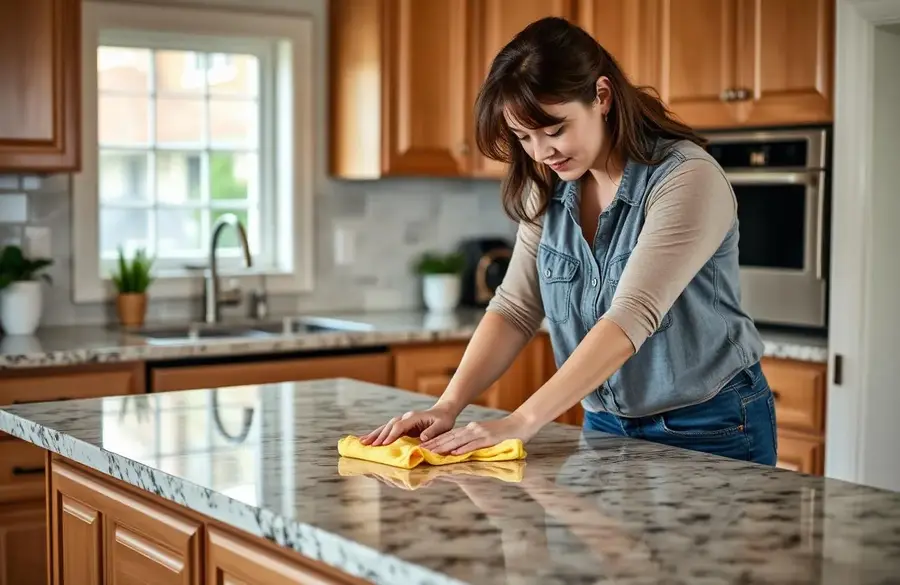
Natural stone — marble, travertine, granite, quartzite — is the surface most often damaged by well-intentioned cleaning. Vinegar and citric acid will permanently etch marble. Even mild acidic 'green' cleaners can dull granite over time. The right product is a dedicated pH-neutral stone cleaner, full stop. Method's All-Purpose Granite is a reliable, widely-available option.
Wood floors are the second most-damaged surface we see. Steam mops are terrible for hardwood — they force moisture into the seams and void most manufacturer warranties. Use a flat microfiber mop, lightly damp with a hardwood-specific cleaner like Bona.

Our default kit
For clients who request our eco-friendly routine, here is what our cleaners carry:
- Method or Branch Basics all-purpose spray for surfaces
- Bona for hardwood floors
- Method Granite for stone counters
- Better Life Naturally Foaming Tub & Tile for bathrooms
- Hydrogen peroxide spray for mildew touch-ups
- Distilled white vinegar and microfiber cloths for glass
- Eco-Me toilet bowl cleaner
- Microfiber cloths color-coded by zone (kitchen, bath, general) to prevent cross-contamination
Bottom line
Green cleaning works for most everyday tasks if you choose the right products and skip the marketing fluff. For our clients in the Philadelphia, South Jersey, and Delaware areas who request our eco-friendly routine, we deliver the same level of clean — sometimes with a slight time premium on heavily soiled spaces. Worth it.
Related articles
- How Often Should You Deep Clean Your House? A Realistic Guide for Busy HouseholdsA practical room-by-room guide to how often you actually need to deep clean — based on real homes in NJ, PA, and DE, not magazine-cover fantasy schedules.
- What to Expect From a Professional Cleaning Service (and Red Flags to Watch For)A no-nonsense guide to hiring a residential cleaner: what good service looks like, what bad service looks like, and the questions to ask before anyone enters your home.
- The Move-Out Cleaning Checklist Landlords Actually UseA complete room-by-room move-out cleaning checklist based on what landlords and property managers in NJ, PA, and DE actually inspect — and what they deduct from security deposits when it is missed.